
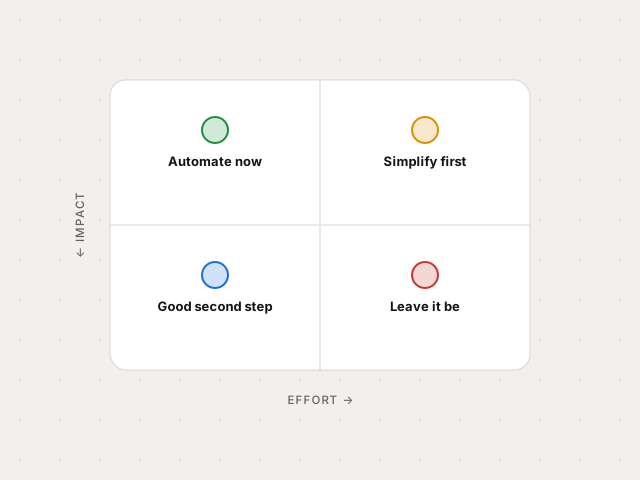
The question is not what can be automated, because almost everything can. The question is what is worth automating first, and that answer depends on two variables anyone can estimate in an afternoon.
1. How much time it eats every month
Take the tasks that repeat and multiply: minutes per run, times per week, people involved. The figure is usually surprising. A fifteen-minute process done three times a day adds up to more than sixteen hours a month.
2. How much it costs to automate
The effort depends on whether the tools involved have an API, how many exceptions there are and how many decisions require human judgment. A process with twenty special cases is not a good first candidate even if it consumes a lot of time.
Start with the high-impact, low-effort quadrant
- Lots of time consumed and few exceptions: automate it now.
- Lots of time and many exceptions: simplify the process before touching anything.
- Little time and easy: a good second course, especially if it reduces errors.
- Little time and hard: leave it as it is.
What is almost never worth automating
Decisions that depend on context that is not written down anywhere, processes that will change next month, and anything that is only done twice a year. There, the maintenance work outweighs the savings.