
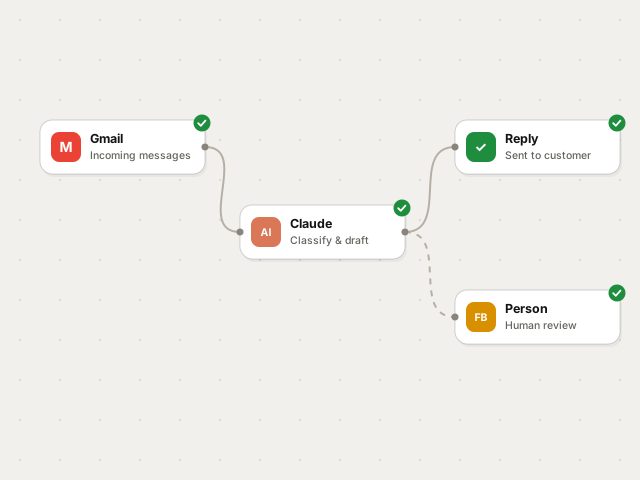
A well-designed AI agent does not replace your support team: it takes a good share of the messages that always ask the same thing off their hands, and leaves them the rest with the context already prepared.
What an agent does well today
- Answering questions whose answer is written in your documentation.
- Classifying and routing messages to the right team.
- Summarizing long conversations before handing them to a person.
- Drafting replies that someone reviews and sends.
What should stay in a person's hands
Complaints, exceptions to commercial policy, anything involving refunded money or contractual commitments. Not because of technical capability, but because the cost of an error there is far greater than the savings.
How made-up answers are avoided
An agent should answer only from sources you control, cite where each fact comes from, and be allowed to say it does not know. If it cannot find an answer, it escalates. That rule, properly implemented, removes most problems.
Before launching it
Test the agent on real conversations from the last month and compare its answers with the ones your team gave. It is the fastest way to see where it gets things right and where it should not decide on its own yet.